Think you need an hour, extreme flexibility, or advanced balance to start yoga? Think again. This 15-minute yoga routine for beginners is designed for real people with busy schedules. No complicated transitions. No intimidating poses. Just simple, mindful movement that helps release tension, build gentle strength, and improve flexibility.
Whether you practice first thing in the morning, during a lunch break, or before bed, this sequence fits easily into your day. All you need is comfortable clothing and a yoga mat if available. In just 15 minutes, you can stretch tight muscles, wake up your spine, and calm your mind.
Table of Contents
Why This 15-Minute Yoga Practice Actually Works
The reason this short routine is effective is because it focuses on mobility, breath awareness, and foundational strength. It begins with gentle seated stretches to release tension in the neck and shoulders. Gradually, it progresses into kneeling stretches, lunges, and standing poses that activate larger muscle groups.
Instead of forcing flexibility, the sequence prepares the body step by step. You warm up before deeper stretches. You balance effort with ease. This makes it safe and sustainable for beginners.
Consistent short sessions are often more effective than occasional long workouts. Practicing just three to four times a week can noticeably improve posture, reduce stiffness, and increase overall energy.
Overview Table: 15-Minute Beginner Yoga Flow
| Phase | Pose Focus | Main Benefit |
|---|---|---|
| Seated Warm-Up | Neck Stretches and Seated Cat-Cow | Releases neck and shoulder tension |
| Side Body Opening | Seated Side Stretch | Improves rib and waist flexibility |
| Core Activation | Tabletop and Balancing Tabletop | Builds stability and balance |
| Hip Mobility | Low Lunge and Half Splits | Opens hips and hamstrings |
| Full Body Reset | Downward Dog and Forward Fold | Lengthens spine and legs |
| Relaxation | Child’s Pose | Calms nervous system |
This structure ensures your body is prepared before moving into deeper stretches and balance work.
Gentle Seated Warm-Up for Tension Relief
The routine begins in a comfortable seated position, often cross-legged. You lengthen your spine and gently tilt your head side to side to stretch the neck. Slow chin movements forward and back help release stiffness caused by screen time and long hours of sitting.
Next, you move into Seated Cat-Cow. On the inhale, you lift your chest and arch slightly. On the exhale, you round your back and tuck your chin. This warms up the spine and improves posture awareness.
A seated side stretch follows, lengthening muscles along the ribs and waist. This not only increases flexibility but also improves breathing capacity.
Building Strength with Tabletop and Balance
From seated, you transition to hands and knees in Tabletop. Shoulders stack over wrists, and hips align over knees. This creates a stable base.
Balancing Tabletop adds gentle strength work. Extending one leg back activates the glutes and core. Holding this position improves coordination and strengthens stabilizing muscles.
Gate Pose may follow by extending one leg out to the side. This deepens the side stretch and encourages hip mobility while building support in the standing leg.
Unlock Tight Hips with Low Lunge and Half Splits
Low Lunge is one of the most effective beginner poses for tight hips. With one foot forward and the back knee resting on the floor, you stretch the hip flexors. Lifting the arms lengthens the spine and improves balance.
Shifting back into Half Splits straightens the front leg and stretches the hamstrings. The focus is on keeping the spine long rather than reaching the floor. This prevents strain and builds flexibility safely.
These poses are repeated on the opposite side to keep the body balanced.
The Reset: Downward Dog and Forward Fold
Downward-Facing Dog connects the upper and lower body. Hands press firmly into the mat as hips lift high. You can gently bend one knee at a time to stretch the calves and hamstrings.
Walking your hands back toward your feet brings you into Standing Forward Fold. This decompresses the spine and allows the head and neck to relax completely.
These poses provide a full-body stretch while lightly strengthening arms and shoulders.
Detailed Pose Breakdown Table
| Pose | Focus Area | Key Benefit | Beginner Tip |
|---|---|---|---|
| Seated Cat-Cow | Spine | Improves mobility | Move slowly with breath |
| Balancing Tabletop | Core and Glutes | Builds stability | Keep hips level |
| Low Lunge | Hip Flexors | Opens tight hips | Keep front knee aligned |
| Half Splits | Hamstrings | Improves flexibility | Avoid rounding spine |
| Downward Dog | Full Body | Strengthens and stretches | Bend knees if needed |
| Child’s Pose | Back and Hips | Deep relaxation | Breathe slowly |
Deep Hip Release and Spinal Mobility
Returning to the mat, seated windshield wipers gently rotate the knees side to side. This loosens the hips and improves joint mobility.
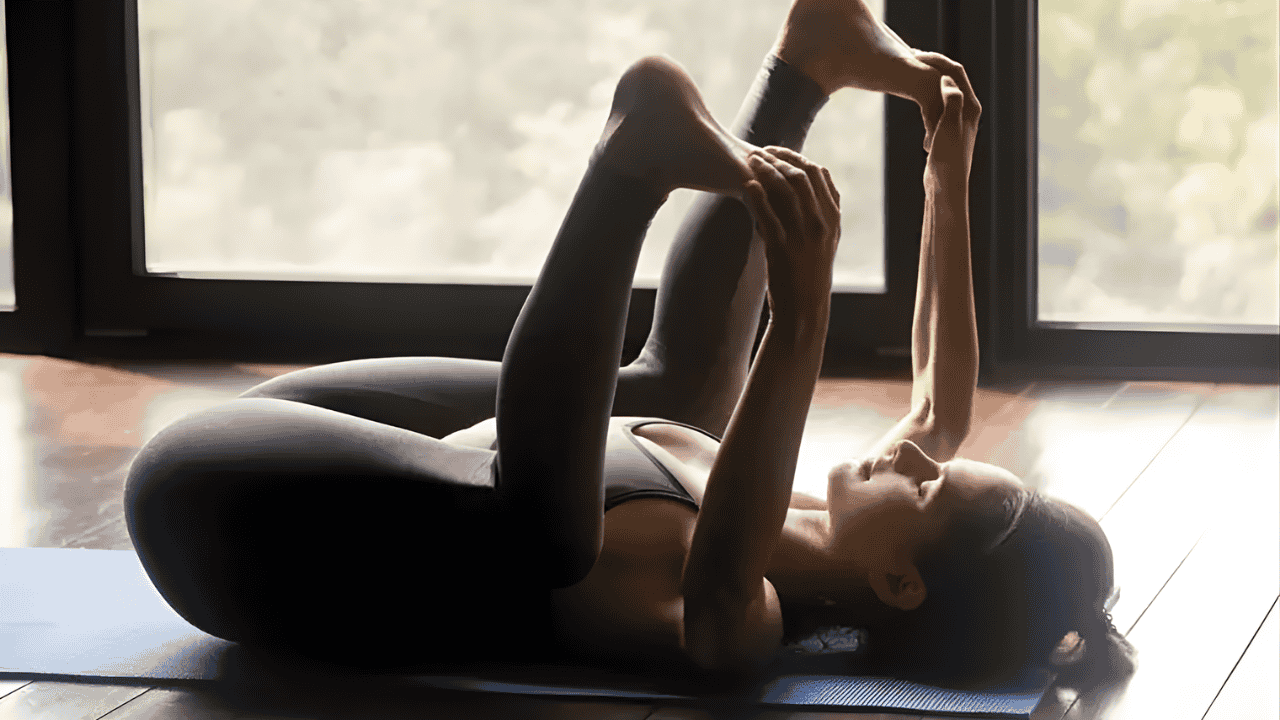
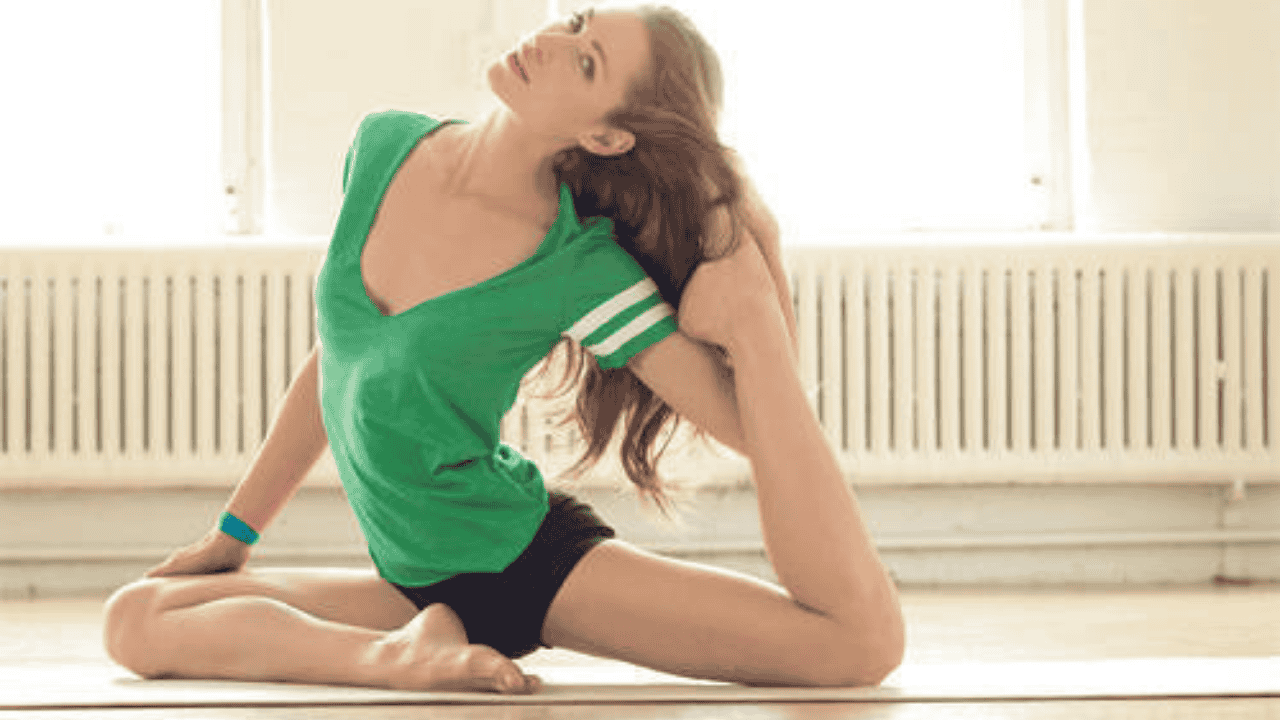
A Seated Pigeon variation stretches one hip at a time by crossing the ankle over the opposite knee. This is particularly helpful for those who sit for long periods.
A Seated Twist follows, encouraging spinal mobility and improving posture awareness. Twists also gently stimulate digestion.
Gentle Back Strengthening and Final Relaxation
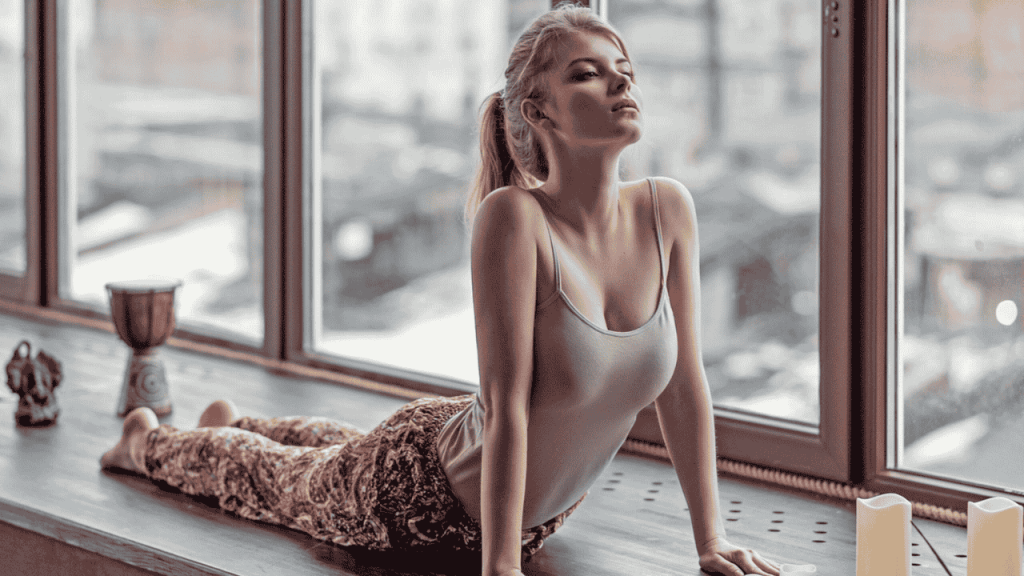
The routine finishes with Baby Cobra. Lying on your stomach, you press lightly into your hands and lift your chest while keeping elbows bent. This strengthens the lower back and opens the chest without excessive strain.
Finally, you move into Child’s Pose. Hips sink toward heels, arms stretch forward, and your forehead rests on the mat. This grounding position helps calm the nervous system and regulate breathing.
Unlike longer yoga sessions that may end with extended relaxation, this short practice leaves you refreshed and energized.
Why Beginners Love This Routine
This 15-minute sequence is approachable and non-intimidating. It avoids extreme poses while still delivering real benefits. It improves flexibility gradually, strengthens essential muscle groups, and reduces stress without overwhelming the body.
You do not need to be flexible. You do not need to be strong. You only need consistency.
Even a short daily session can transform how your body feels and moves.
Frequently Asked Questions
Q: Is 15 minutes of yoga enough for beginners?
A: Yes, consistent 15-minute sessions can improve flexibility, strength, and posture effectively.
Q: Do I need to be flexible to start yoga?
A: No, yoga helps build flexibility over time regardless of your starting point.
Q: How often should beginners practice yoga?
A: Three to four times per week is ideal for noticeable results.